A university may become concerned about authorship when a new assignment looks very different from a student’s earlier work. Changes in vocabulary, sentence structure, referencing, argument style or technical knowledge may prompt questions about generative AI, contract cheating or unauthorised assistance.
Comparing previous submissions can form part of an investigation, but the comparison should not automatically prove misconduct. Students should know which earlier pieces are being used and have an opportunity to explain genuine differences. Those facing a serious authorship allegation may consider authorship and academic misconduct support from Aldwych Legal, a Central London-based legal consultancy supporting students across the UK.
Why Previous Work Gets Reviewed
Authorship cases are unusual because the university is often trying to determine not simply whether material is copied, but whether the student genuinely produced the submitted work.
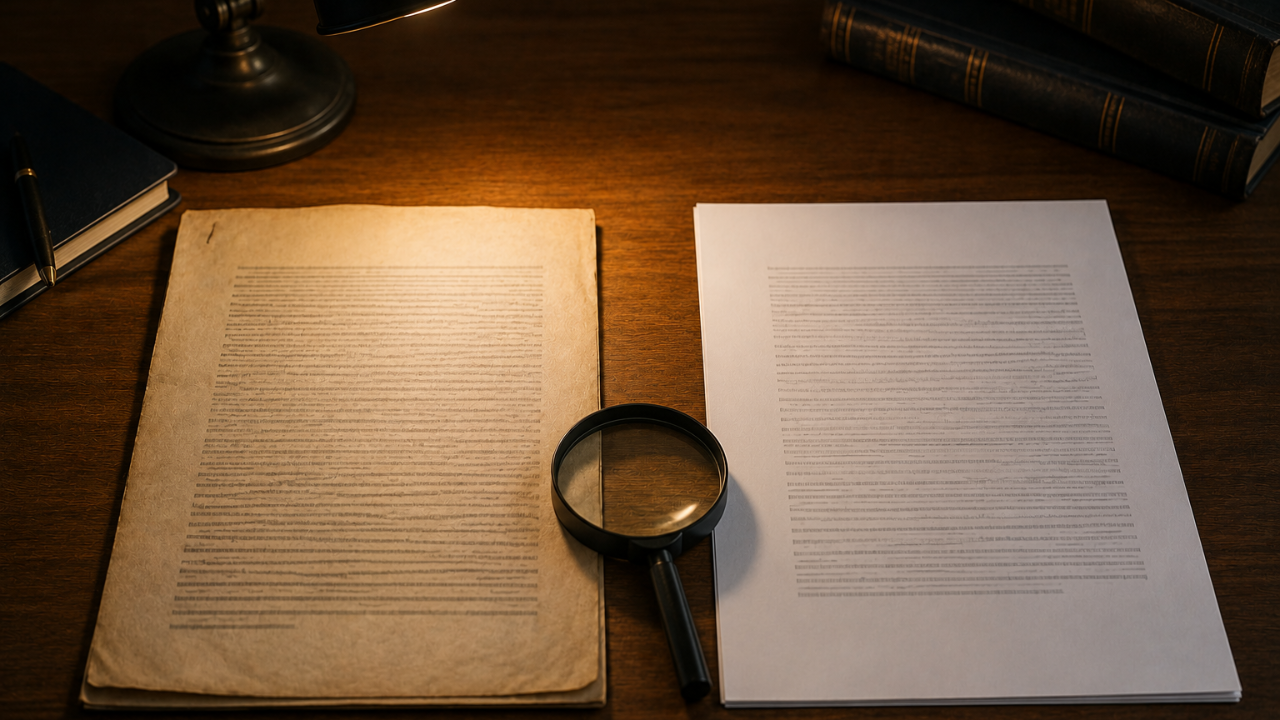
Earlier assessments can provide background. A panel may compare writing style, terminology, research methods or the way arguments are developed.
Current OIA guidance specifically recognises that providers may compare disputed work with assessments previously completed by the student. However, the comparison needs to be handled transparently rather than used as undisclosed evidence.
A Difference Is Not Proof
Students develop academically. Someone who struggled with writing in their first term may produce much stronger work a year later.
A different assignment may also require another style. A reflective report can sound very different from a dissertation, while technical coursework may contain terminology rarely used in earlier essays.
Language support, feedback, wider reading and greater familiarity with academic conventions can all change how someone writes.
A university can reasonably ask questions about a major unexplained change, but the difference itself should be treated as evidence requiring interpretation rather than an automatic finding of misconduct.
Students Should See the Comparison
If earlier submissions are being used against a student, transparency becomes important.
The OIA’s current AI and academic misconduct guidance says providers should identify which previous pieces of work are being considered so the student can comment on whether and why their approach differed.
This prevents the student from having to defend themselves against a vague statement such as “this does not look like your normal writing”.
They should be able to identify the passages, features or differences the university considers significant and explain them directly.
An OIA Case Shows the Risk
A 2025 OIA case involved a student accused of submitting AI-generated material. A disciplinary panel compared the essay with some of the student’s other work.
The OIA upheld the student’s complaint because the panel had not properly considered all of the student’s evidence and the student had not been given a fair opportunity to comment on how the disputed essay compared with the earlier submissions relied upon.
When the provider later reconsidered the case, it decided that academic misconduct had not occurred.
The important point is procedural: comparison evidence should be disclosed and tested fairly.
Writing Style Can Change
A student may have several genuine reasons for writing differently.
They may have:
- received detailed tutor feedback;
- attended academic-writing workshops;
- changed their research method;
- used permitted proofreading support;
- developed stronger English-language skills;
- spent more time editing;
- adopted a different citation system; or
- worked on a topic they understand particularly well.
A response should explain the actual reason rather than simply say that writing styles naturally change.
Where possible, supporting evidence such as drafts, feedback or version histories can make the explanation more persuasive.
Spoken English Is Different
Universities should also be cautious about comparing written academic English with the way a student speaks during a disciplinary hearing or viva.
An OIA contract-cheating case involved a student whose spoken English at the panel was viewed as inconsistent with the quality of an essay. The student explained that written English was stronger than spoken English and provided drafts, including material in their first language.
The OIA found that this evidence had not been properly considered and upheld the complaint.
Nervousness, preparation time and language background can all affect spoken performance.
Drafts Can Tell the Story
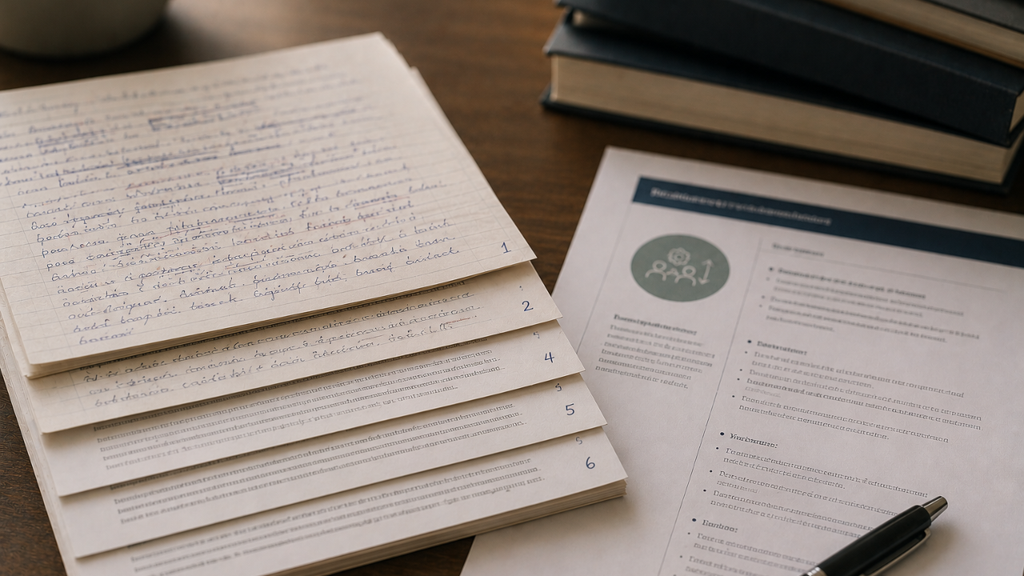
Where authorship is disputed, the development of the assignment may be more informative than a simple comparison with older work.
Useful records can include:
- outlines;
- handwritten notes;
- early drafts;
- document version histories;
- research files;
- reference-manager records; and
- tutor feedback.
These materials can show how ideas changed over time.
The OIA’s current guidance encourages providers investigating suspected AI use to consider notes, drafts and other evidence of how a student prepared their submission.
Students should preserve original records rather than create new “drafts” after receiving an allegation.
AI Detection Needs Wider Evidence
Writing comparisons increasingly appear alongside AI-detection software.
Current OIA casework stresses that providers should understand the limitations of detection tools and consider them alongside other information rather than treating a software result as conclusive evidence.
In another 2025 case, the OIA criticised a provider for failing to show what evidence supported its conclusion that AI had been used and for not considering draft plans and earlier versions contemplated by its own procedure.
An AI flag, writing-style change and previous-work comparison may justify questions, but the overall evidence still needs fair assessment.
Language and Disability Need Care
A student’s writing style may also be influenced by disability, communication differences or the fact that English is not their first language.
OIA guidance specifically says providers should consider whether assumptions about AI use could be biased against a student’s writing style in these circumstances.
This does not prevent universities from investigating genuine concerns. It means decision-makers should avoid treating an unfamiliar writing pattern as inherently suspicious without considering reasonable alternative explanations.
Where relevant, students should explain these factors and provide evidence that helps place the comparison in context.
Prepare for an Authorship Meeting
If the university arranges a viva or authorship interview, students should reread both the disputed submission and any earlier work being compared.
They should be ready to explain the research process, main argument, sources and significant changes in writing approach.
They do not need to memorise every sentence.
The OIA has criticised an authorship process where a viva focused heavily on subject knowledge but did not give the student a proper opportunity to explain how they had actually worked on the assignment.
The investigation should address authorship, not simply test memory.
Technical Evidence May Join the Picture
Sometimes writing comparisons are combined with metadata, IP addresses or online assessment records.
Aldwych Legal’s academic misconduct evidence appeal case study illustrates a dispute where technical evidence relating to online examinations became central to an academic misconduct decision.
The broader lesson is that different forms of evidence should be assessed for what they actually establish. A writing-style comparison does not automatically prove authorship problems, just as a digital record does not necessarily explain who performed a particular action.
Look Closely at the Decision
If misconduct is eventually found, students should examine how the university used the comparison evidence.
Did the decision identify the previous work relied upon? Did it explain what differences were considered significant? Was the student’s explanation addressed? Were drafts and other authorship evidence considered?
A conclusion such as “the writing was too different from previous work” may need fuller reasoning where serious penalties follow.
Clear reasons are particularly important if the student later needs to decide whether there is a legitimate appeal ground.
When Comparison Becomes an Appeal Issue
A comparison with previous work may become procedurally significant if evidence was withheld, the student was not allowed to comment on it, or decision-makers ignored relevant explanations.
Aldwych Legal’s university evidence and procedural fairness case provides another example of how disputed evidence and procedural fairness can become central to a serious university appeal.
The existence of comparison evidence does not itself make a decision unfair. The issue is how the evidence was obtained, disclosed, interpreted and weighed against the student’s response.
Conclusion
Universities can compare disputed work with a student’s previous assessments when investigating authorship or suspected academic misconduct. What they should avoid is treating a difference in style as automatic proof that someone else, or an AI tool, produced the work.
Students should know which earlier submissions are being relied upon and have an opportunity to explain genuine differences. Drafts, version histories, research notes and feedback may provide a clearer picture of authorship than writing style alone.
Aldwych Legal supports students across the UK with academic misconduct and university appeal matters. No adviser can guarantee that authorship concerns will be dismissed, but transparent comparison and proper consideration of the wider evidence are important parts of a fair investigation.
Frequently Asked Questions (FAQs)
Can universities compare my current work to older assignments?
Yes, but the comparison alone shouldn’t prove misconduct; you should see it and explain any differences.
Does a change in writing style prove AI use or cheating?
No. It could reflect feedback, editing, new skills, or a different topic; genuine reasons should be considered.
Can weaker spoken English wrongly suggest someone else wrote my work?
It shouldn’t. Nervousness, language background, and preparation can all affect spoken versus written performance.
Should I be shown which earlier work is being compared?
Yes. You’re entitled to know which submissions are relied on so you can explain any differences directly.
What evidence best shows I genuinely wrote my own work?
Drafts, notes, version histories, and feedback often tell the authorship story better than style comparison alone.