
University study often involves collaboration. Students revise together, compare notes and discuss difficult concepts. These activities can be legitimate. Problems arise when support crosses into sharing material that an assessment expects each student to produce independently.
A student may believe they were only being helpful, yet the university may consider the conduct collusion, unauthorised assistance or facilitating academic misconduct. The position depends on the assessment instructions and university regulations. Students facing this type of allegation may consider academic misconduct support from Aldwych Legal, a Central London-based legal consultancy supporting students across the UK.
Helping Is Not Always Harmless
The important distinction is between learning together and producing assessed work together. Discussing a theory before an essay is different from sending a completed paragraph to a classmate who then uses it in their submission.
Universities may define collusion as working with another person on an assessment that should represent individual work. Some regulations also cover helping another student obtain an unfair academic advantage. Students should therefore check both the misconduct policy and the instructions for the specific assessment.
Start With What Was Allowed
Group study is not automatically prohibited. Some modules encourage peer discussion, shared research or collaborative preparation. Others permit discussion but require every student to write the final answer independently.
The assessment brief is therefore crucial. It may explain whether students can exchange plans, compare calculations, review drafts or discuss possible answers.
The question is not simply whether students communicated; it is whether the assistance breached the rules that applied at the time the kind of assessment central to Education Law.
Sharing a Draft Creates Risk
A common problem begins when a student sends a draft to a friend “just to help”. If the friend copies wording, structure or analysis, similarity between the final submissions may trigger an investigation.
The student who originally wrote the material may still face questions even if they copied nothing themselves. The university may investigate whether they knowingly enabled another person to submit material that was not independently produced.
That does not mean both students must automatically receive the same finding. Their individual conduct should be examined separately.
Messages Can Change the Meaning
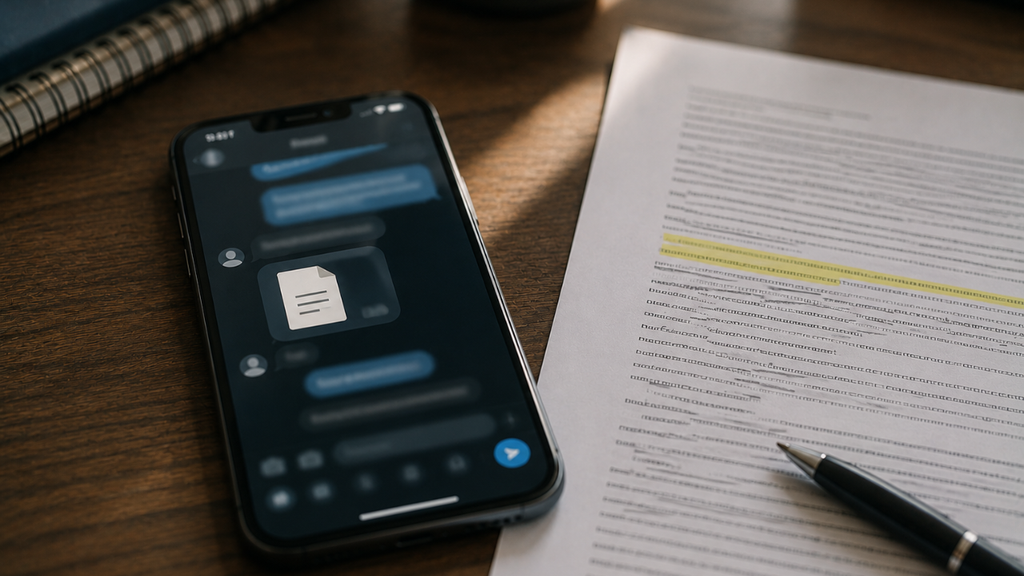
WhatsApp chats, emails and shared documents often become important evidence. A short message can look damaging when viewed alone. “Use my answer” is different from “look at how I structured this, but write your own version”.
Students should preserve complete conversations rather than isolated screenshots where possible. Context can show whether the exchange concerned revision, permitted group work or completed assessed content.
Original records should be preserved once an allegation begins.
One Student May Be More Responsible
Collusion cases do not always involve equal participation. One student may actively request completed answers, while another may send material without expecting it to be copied. Someone might also share a file for another purpose.
Universities should look at what each student knew and did. Timestamps, file permissions, messages and version histories may help distinguish the person who created material from the person who later reproduced it.
Individual responsibility matters both when deciding whether misconduct occurred and when considering penalty.
Group Chats Need Special Care
Large revision chats can create additional risk. Students may share resources throughout the term without thinking about what becomes prohibited once an assessment opens.
Sharing a journal article is different from posting a photograph of a live examination question. General revision notes before an assessment also differ from circulating model answers while students are completing it.
Students should check when collaboration must stop. Timing can change the significance of ordinary communication.
Online Exams Raise the Stakes
Remote examinations can blur the line further because students remain connected through phones, messaging apps and social platforms. Universities may review messages, platform logs or similarities between answers where they suspect communication during the assessment.
Aldwych Legal’s online examination misconduct appeal case study concerns a serious dispute in which technical evidence became central. Although the facts differ from ordinary collusion, it illustrates why digital records should be interpreted alongside the student’s explanation.
A technical pattern or similar answer can justify investigation without automatically proving how collaboration occurred.
Helping Without Receiving Anything
Students sometimes believe misconduct cannot apply to them because they gained no academic advantage. They may have shared their own work but copied from no one.
Some university regulations treat facilitating another student’s misconduct as a separate offence or include it within collusion. The student’s role may therefore be examined even where their own submission is original.
The precise wording of the rules matters. A response should identify what was shared, why it was shared and whether the student understood that it could be used in assessed work.
When Work Is Taken Without Permission
A different situation arises when another student obtains and copies work without the author’s permission. The original student may discover the problem only after both submissions are flagged.
Messages, file-access records and document histories may help show whether the work was deliberately shared or accessed without consent.
A clear chronology can show when the document was produced, stored and accessed.
Prepare Your Own Explanation
Students involved in a multi-person allegation should not rely entirely on a joint defence. Accounts can diverge, and another student may describe events differently.
Each student should prepare their own factual explanation. Useful evidence may include the assessment brief, drafts, complete message threads, version histories and records showing when files were exchanged.
A response can separate what is accepted from what is disputed. For example, a student may accept sending a draft while denying that they agreed it could be copied.
A Hearing Should Test Each Case
Where several students are investigated together, a joint hearing may help a university understand shared evidence consistently. Even then, each student should be able to respond to allegations affecting them personally.
Students may also have different records, intentions, involvement or mitigation.
The final decision consistent with Public Law standards of reasoned decision-making should explain what each person was found to have done rather than rely on a general conclusion that ‘the students colluded’.
Penalty Does Not Have to Match
Even where two students are both found responsible, identical penalties are not inevitable. One may have initiated the sharing, another may have copied extensively, while a third had limited involvement.
Previous misconduct, admissions, mitigation and seriousness may also differ.
Aldwych Legal’s university disciplinary fairness case study illustrates the broader importance of evidence, procedural fairness and proportionate sanctions in serious university proceedings. Another case cannot determine a new outcome, but it shows why the decision the kind of individualised assessment expected in Dispute Resolution should reflect the individual evidence.
What to Do Before Sharing Work
The safest approach is to check the assessment rules before sending another student anything connected with assessed work. If instructions are unclear, asking the module tutor can be better than assuming ordinary study habits remain permitted.
Students can still discuss concepts or recommend sources where permitted. The risk increases when help starts producing the answer itself.
Conclusion
Helping a classmate can cross into academic misconduct when support becomes prohibited collaboration, sharing of assessed content or assistance that enables another student to submit work that is not genuinely their own.
Universities should still assess individual responsibility. Similar submissions or shared messages may justify investigation, but they do not automatically prove that every student played the same role. Assessment instructions, communications, drafts and version histories can help explain what happened.
Aldwych Legal supports students across the UK with academic misconduct and university appeal matters. No adviser can guarantee that a collusion allegation will be dismissed, but a precise explanation of what was shared, why it was shared and how it was used can help ensure each student is assessed on their own conduct.
Frequently Asked Questions (FAQs)
Can helping a friend count as misconduct if I copied nothing?
Yes. Facilitating another student’s misconduct may be a separate offence, even with an original submission.
Is discussing ideas the same as sharing assessed work?
No. Discussing concepts is different from sending a completed paragraph to a classmate who then submits.
Should both students get the same penalty if flagged?
Not necessarily. Individual role, intent, and involvement should shape separate, proportionate outcomes.
What if someone copied my work without permission?
Messages, file access, and document histories can help show it was taken without your consent.
What should I do before sharing anything assessment-related?
Check the rules first, or ask your tutor; don’t assume ordinary study habits still apply.