

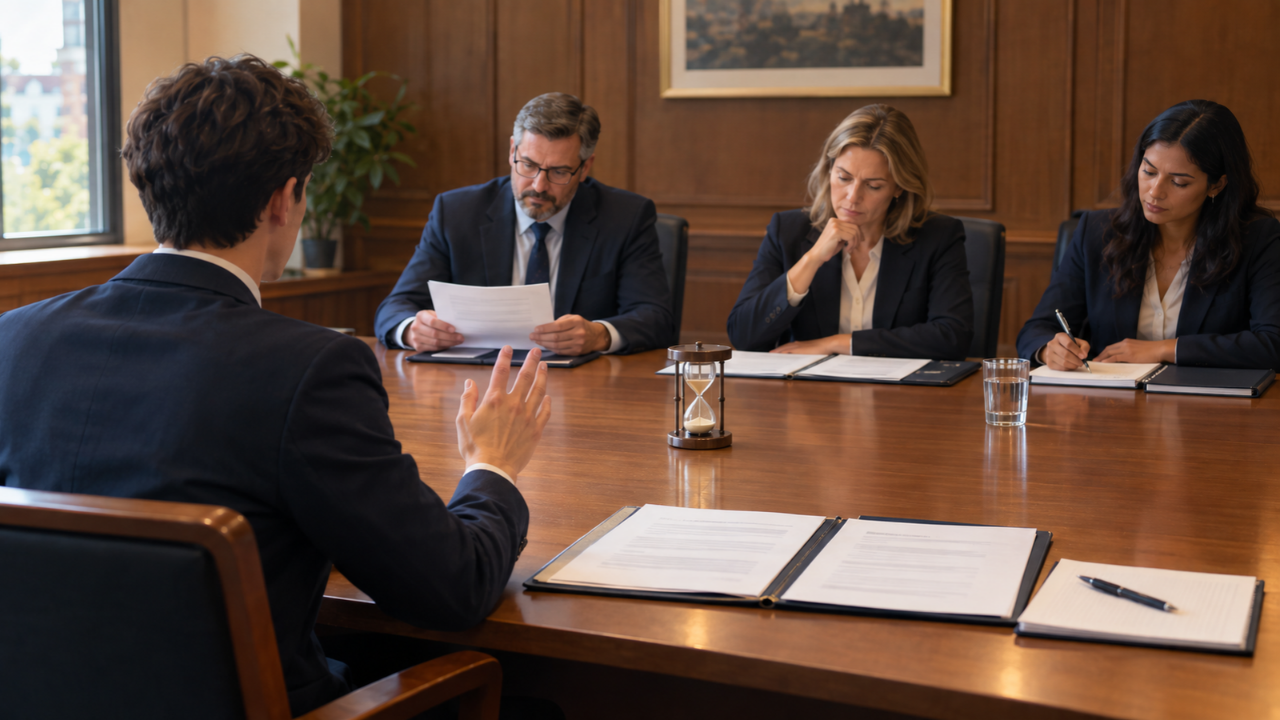
You prepared to answer a plagiarism allegation about one essay. During the hearing, a panel member starts asking whether a previous assignment was purchased or whether a document you submitted is genuine. It can be difficult to tell whether this is ordinary questioning or the beginning of a different case. The distinction matters because your preparation may no longer match the decision the panel intends to make.
The first step is to clarify the scope, not to improvise a detailed defence to everything mentioned. A calm request for the new allegation to be identified the kind of focused clarification any strong Dispute Resolution response depends on can protect the quality of your response while showing that you intend to engage with the process.
Establish what has actually changed
Ask the chair whether the issue is a question about the notified allegation, an additional allegation for determination or information relevant only if a penalty is considered. The same document may be raised for different purposes. Knowing the purpose helps you decide what evidence and preparation are needed.
For instance, questions about how you found a source may test your account of the essay already under investigation. Alleging that you falsified a medical certificate introduces different conduct, evidence and possible consequences. Do not assume every difficult question is a new charge, but do not let a genuinely new accusation remain undefined.
Compare the new issue with the written notice
Keep the invitation, allegation letter and any amendments beside your hearing notes. Identify the assessment, conduct, rule and dates originally specified. Compare these with the new point. A concise reference to the written scope is easier for the chair to address than saying you were not expecting the question.
Read the procedure’s provisions about evidence and adjournment a fair-notice safeguard rooted in Public Law. King’s College London’s published academic misconduct procedure, for example, gives the chair discretion to adjourn where specified evidence timeframes were not met and for other good cause. Your institution’s provisions may differ, so identify the rule applicable to this hearing.
Ask for particulars before answering assumptions
Request the conduct alleged, the rule said to have been breached and the evidence relied upon. If the panel refers to “other suspicious submissions”, ask which submissions and which features are in issue. You cannot check drafts or instructions for an unidentified assessment, and a general concern should not silently become a series of findings.
You can answer straightforward facts you know while reserving your response to material you have not reviewed. Explain that distinction openly. Saying that you submitted an assignment on a particular date does not require accepting the suggestion that someone else wrote it or agreeing that the panel’s comparison is accurate.
Explain the preparation you need
An effective request describes the work required: locating the earlier assessment brief, recovering relevant emails, comparing document versions or obtaining advice on the new rule. Identify why the material is unavailable during the meeting and give a realistic estimate of when it could be supplied.
Time should match complexity. A newly noticed page-number error may be addressed with a short break. A claim of contract cheating across several modules may need new documents and substantial written preparation. Avoid treating adjournment as a tactical formula; explain how it would enable a reliable answer to the particular issue.
Suggest how the hearing could proceed
You might ask the panel to finish questions within the notified scope and adjourn the additional issue. Alternatively, the new material may be so connected to the original allegation that the whole hearing needs to pause. Explain the relationship so the chair can consider whether separating the issues would be workable.
Ask whether the university intends to issue an amended allegation and revised evidence bundle. Clarify the date for your response and whether you may provide further documents or witnesses. If the chair proposes written submissions after the hearing, check whether that gives you a meaningful opportunity to answer any further evidence that emerges.
Avoid unreliable admissions under pressure
Students sometimes agree with a suggestion simply to bring an uncomfortable meeting to an end. Do not say that you probably used a service or that a document must be false if that is not your recollection. Equally, do not deny conduct you know occurred merely because the allegation arrived unexpectedly.
Use precise language about memory. You can say that you need to check which draft was submitted or that you cannot identify a screenshot without the complete conversation. Explain what you can verify and what remains uncertain. A truthful qualified answer is more useful than a confident statement that later documents contradict.
Consider the implications of a different alleged offence
A shift from poor referencing to deliberate fabrication may change the factual enquiry and the range of potential consequences. Ask the university to identify the relevant provisions and whether it considers the new issue within the panel’s authority. Do not assume that labels are interchangeable simply because all appear in an academic integrity policy.
Professional courses can raise additional concerns if dishonesty is alleged. Ask whether a separate fitness-to-practise referral is contemplated and what process would govern it. That question is about understanding the possible sequence, not accepting that academic misconduct necessarily establishes impaired professional suitability in every case.
An illustrative hearing problem
Consider a fictional student questioned about unauthorised collaboration on a laboratory report. A panel member then refers to a second-year spreadsheet and suggests data fabrication. The student no longer has access to the laboratory server and has never been told the spreadsheet is under investigation.
A focused request identifies the new assessment, seeks the spreadsheet and applicable instructions, and explains the need for server records and supervisor correspondence. The student may still answer the collaboration allegation already prepared. This example shows why different issues may need different preparation; it does not predict what any particular panel must decide.
Make a record of the procedural decision
Ask the chair to record the new issue, your request for time and the ruling. After the meeting, send a short written confirmation of your understanding. If the panel agreed to limit its decision to the original allegation, ask for that to be reflected in the outcome or subsequent correspondence.
If you provide further evidence, label the response clearly and explain which new point it addresses. Keep an unaltered copy of every version submitted. Do not rewrite the history of what you said in the meeting; if a later check changes your recollection, explain the correction and the record that prompted it.
If a finding is made without a fair opportunity
Read the reasons carefully to see whether the university actually decided the new allegation or used it to strengthen another finding. Identify the passage, the evidence you would have supplied and why it could matter. This makes a procedural appeal concrete and avoids relying solely on the surprise you experienced.
Check the permitted appeal grounds and deadline immediately, a matter governed throughout by Education Law. An appeal may seek a fresh consideration with proper notice, rather than immediate dismissal of every allegation. Think about the remedy that addresses the defect and what preparation would be needed if the matter returns to a new panel.
Check whether accepting a revised timetable changes any other dates. A postponed hearing may overlap with examinations, placement commitments or a planned absence by your chosen companion. Explain these conflicts early and suggest available dates. If the new allegation concerns another module, ask whether its mark or progression decision will now be held back as well. These consequences should be understood while the process is being arranged, rather than discovered after the opportunity to request an academic contingency has passed.
Support for an unexpected change of case
Adam Hussain, principal lawyer, Founder and Managing Director of Aldwych Legal, has experience in academic misconduct proceedings and university appeals. The firm can help identify whether the case has materially changed, organise the additional evidence and prepare a proportionate request for time or a focused procedural challenge.
For assistance in England or Wales, email the original allegation, any new material and the hearing date to info@aldwychlegal.com, or call 020 4584 2472. Aldwych Legal’s work covers non-reserved legal services, with appropriately authorised solicitors or counsel involved where reserved litigation or advocacy is required.
About Adam Hussain
Adam Hussain is Aldwych Legal’s Founder & Managing Director and head lawyer. His academic misconduct and appeal work includes identifying changes to the alleged case and helping students prepare accurate responses to additional allegations and evidence. He holds an LL.M. in International Business Law from King’s College London, has completed Bar training and Practical Legal Training, and is a PhD doctoral researcher in Legal Science at Royal Holloway, University of London.



