
Who Should Read This:
This is relevant if your child has been injured at school, in a playground, or on play equipment — and you’re not sure whether the school did enough to prevent it, or what to do next.
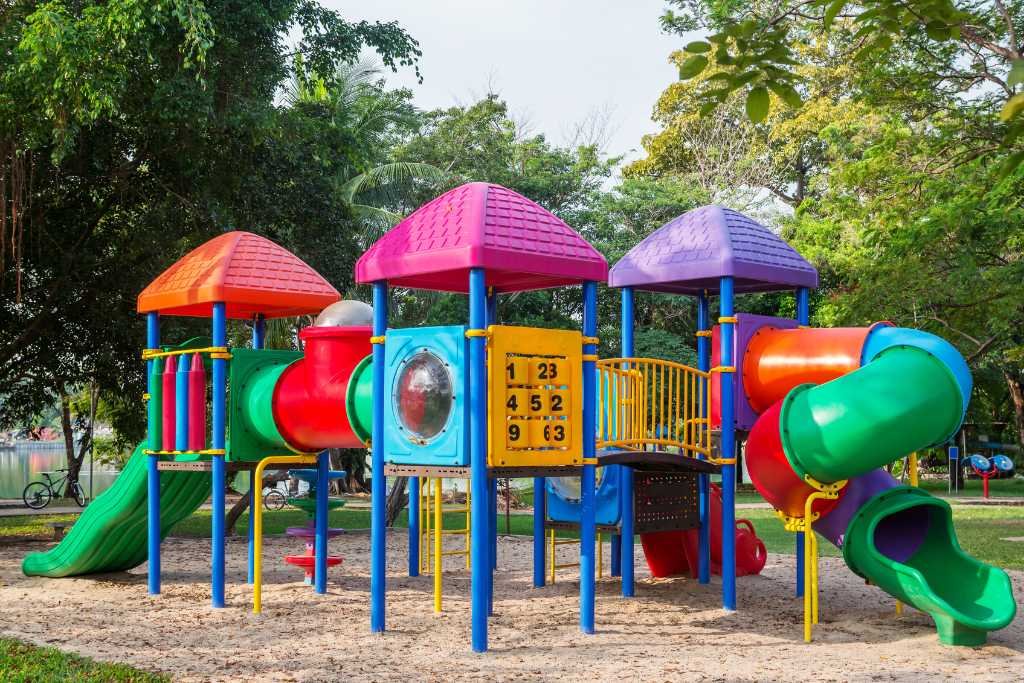
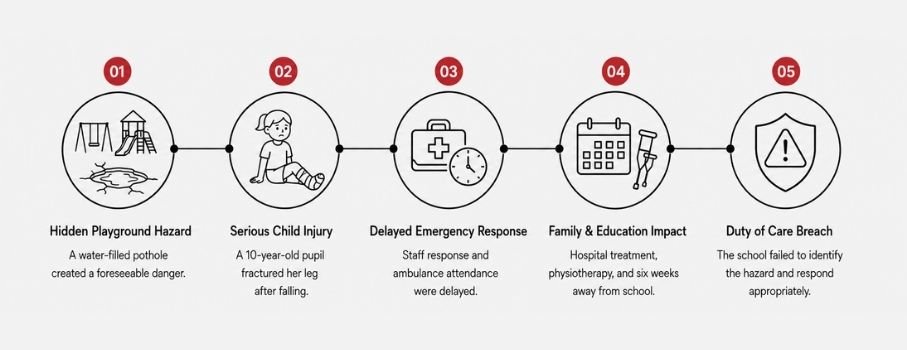
Sophie, a 10-year-old pupil at a London primary school, fractured her leg after tripping in a water-filled pothole in the school’s junior play area.
Staff took too long to respond. First aid didn’t follow approved guidance. An ambulance wasn’t called promptly.
Aldwych Legal was instructed to pursue a playground injury claim against the school on Sophie’s behalf.
- What happened: A hidden hazard in the play area caused a serious injury
- Who was liable: The school, for breaching its duty of care to a pupil
- Where things stand: A settlement has been reached, with the school accepting liability
The Client’s Story
It was a routine school day. Sophie wandered into the junior play area, like she had done hundreds of times before.
What she couldn’t see was a pothole, hidden beneath a pool of water. She lost her footing. She fell. She fractured her leg.
What happened next made things worse. The nearest member of staff didn’t arrive quickly. When they did, first aid wasn’t administered properly. The ambulance wasn’t called promptly either — leaving Sophie in pain and distress for longer than she should have been.
The physical injury was only part of the picture. Sophie needed hospital assessment and ongoing physiotherapy. She missed six weeks of school. Her parents had to take time off work to care for her during recovery.
An internal review, along with medical reports, later confirmed what her parents already suspected: the hazard should never have been there in the first place.
Understanding Playground Injury Claims
A playground injury claim isn’t just about proving a child got hurt. It’s about proving the injury happened because someone responsible for their safety fell short of what the law expects.
Schools — whether state or private — owe pupils a duty of care. That means taking reasonable steps to keep the premises safe, spotting hazards before they cause harm, and responding properly when something does go wrong.
When a school fails in that duty, and a child is injured as a result, a civil claim for compensation may be possible. This isn’t about punishing a school. It’s about recognising the harm caused, covering the practical costs of recovery, and — often just as importantly — making sure the hazard gets fixed so it doesn’t happen to another child.
Who Was Legally Responsible?
In legal terms, “duty of care” means a school must take reasonable steps to prevent foreseeable harm to the children in its care.
A hidden pothole, filled with water, sitting in an area where children play every day, is exactly the kind of hazard a school is expected to identify and fix. In Sophie’s case, an inspection of the premises confirmed the hazard had not been properly addressed.
There were, in fact, two separate breaches at play:
The hazard itself. The pothole should have been identified and repaired before it caused an injury.
The response afterwards. The delay in providing first aid, and the delay in calling an ambulance, fell short of the school’s health and safety obligations — and made the situation worse than it needed to be.
Both of these connect directly to causation — the legal link between what the school did (or didn’t do) and the harm Sophie suffered, including her medical costs, her time off school, and the care her parents had to provide.
Our Investigation Process
Before any claim can be pursued properly, the facts need to be nailed down.
We arranged a medical assessment for Sophie, to properly document the injury and its impact. We commissioned an independent inspection of the school premises, to establish exactly how the hazard had been allowed to develop and go unaddressed. We reviewed the school’s own internal review and incident records.
Throughout, we maintained clear, structured correspondence with the school and its insurer — making sure nothing got lost and every step was properly documented.
Evidence That Made the Difference
Not all evidence carries equal weight. In a case like this, three things mattered most.
Independent expert evidence. We obtained assessments from a paediatric physician and a health-and-safety expert. Their independence gave the evidence real credibility — it wasn’t just the family’s account, it was professional, third-party confirmation of the breach and its impact.
The premises inspection. A formal inspection confirming the hazard existed, and had gone unaddressed, made it far harder for the school to dispute liability.
A clear paper trail. Medical records, school incident reports, and correspondence, all properly organised, meant the case wasn’t reliant on memory or dispute over what happened.
If you’re a parent in a similar position, this is worth remembering: the sooner these things are documented — photos of the hazard, medical records, incident reports — the stronger your position later.
Our Legal Strategy
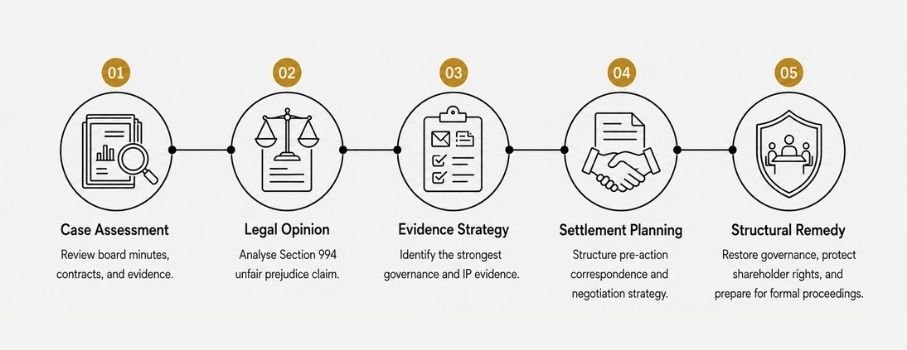
Our approach was built around the Personal Injury Pre-Action Protocol — the structured process that governs how a personal injury claim should be handled before it ever reaches a courtroom.
We pursued a practical settlement wherever possible, rather than pushing straight toward litigation. That meant setting out a clear timeline in line with the Civil Procedure Rules, and putting forward specific proposals for remedy and costs.
This wasn’t just about avoiding court for its own sake. A well-evidenced, clearly reasoned settlement proposal often gets a faster, less stressful outcome for a family already dealing with a child’s recovery — while still holding the school properly accountable.
The Outcome
A settlement was reached with the school. Crucially, the school accepted breach of duty and liability for the injury.
The settlement provided compensation covering medical costs and ongoing care and support. It also led to concrete safety improvements at the school, aimed at preventing the same hazard from causing harm to another child.
Parent’s Legal Guide: Understanding Playground Injury Claims
If you’re dealing with something similar, here’s a general guide to how this process usually works. This is educational information, not specific advice on your situation — every case depends on its own facts.
What “duty of care” actually means. A school must take reasonable steps to keep pupils safe from foreseeable harm. This doesn’t mean every accident is the school’s fault — but a hazard that should have been spotted and fixed is a different matter.
What evidence generally matters. Medical records, photographs of the hazard (if safe and possible to obtain), incident reports, and witness accounts from staff or other parents all help build a clear picture of what happened.
How the claims process generally works. Most personal injury claims follow the Pre-Action Protocol — a structured process involving medical assessment, evidence-gathering, and correspondence with the school and its insurer, aimed at reaching a fair resolution without needing to go to court.
What compensation can cover. Depending on the case, compensation can address medical costs, ongoing care needs, and the practical impact on the family — such as time off work to care for an injured child.
Timing matters. Personal injury claims are subject to time limits. Getting advice early means evidence can be gathered while memories and records are still fresh.
Key Legal Takeaways
- Schools owe pupils a duty of care, including identifying and fixing hazards on the premises
- A delay in providing proper first aid or calling emergency services can be a separate breach in its own right
- Independent expert evidence — medical and premises-related — carries significant weight in these claims
- The Personal Injury Pre-Action Protocol is designed to encourage fair settlement before court proceedings become necessary
- A strong claim often leads to more than compensation — it can drive real safety improvements that protect other children
- Early legal advice matters, both for evidence-gathering and because claims are subject to time limits
Frequently Asked Questions
Can I make a claim if my child was injured at school?
In many cases, yes. If the school failed in its duty of care — for example, by not identifying or fixing a hazard — and that failure caused your child’s injury, you may have grounds for a claim.
The right route depends on the specific facts, including how the injury happened and what evidence is available.
How long do I have to make a playground injury claim?
Personal injury claims are subject to strict time limits, which can be different for claims involving children. Getting advice early is important, both to protect your position and to gather evidence while it’s still fresh.
Do I have to go to court to get compensation?
Not necessarily. Many claims are resolved through the Pre-Action Protocol process — involving medical assessment, evidence-gathering, and negotiation with the school and its insurer — without ever reaching a courtroom.
What kind of evidence will I need?
Medical records, photographs of the hazard where possible, incident reports, and any witness accounts all help build a strong case. An independent premises inspection can also be important in establishing what went wrong.
Will pursuing a claim actually change anything at the school?
Often, yes. Beyond compensation, many settlements include commitments to fix the hazard and improve safety — helping prevent the same thing happening to another child.
How Aldwych Legal Can Help
Aldwych Legal is a London-based legal consultancy. We provide non-reserved legal services, and work alongside authorised solicitors and barristers where court proceedings are needed.
We help families understand their rights after a child has been injured at school or in a public playground, review the evidence, and guide the claim through the Pre-Action Protocol toward a fair resolution.
If your child has been injured due to a hazard that should have been prevented, early advice can make a real difference — both to your claim, and to making sure it doesn’t happen again.
Speak with Aldwych Legal today. Visit www.aldwychlegal.com to discuss your family’s situation.