

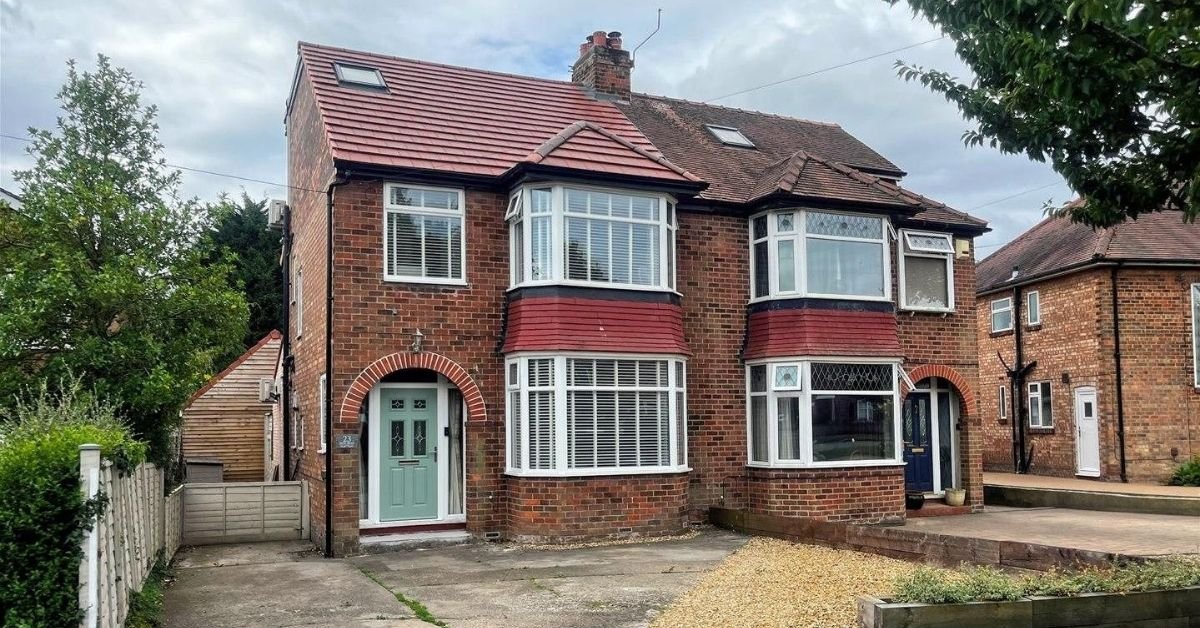
Nobody expects neighbour harassment to happen right outside their own front door.
But for one West Midlands family, that became daily life. Months of intimidation, surveillance and abuse from a neighbour left them exhausted, frightened, and increasingly convinced that nobody was listening.
This case study looks at how Aldwych Legal helped turn that situation around, not by waiting for the police to act, but by building a legal strategy the client could actually use.
If you’re dealing with a neighbour dispute that’s spiralled into something far more serious
This is worth reading.
The Client’s Challenge
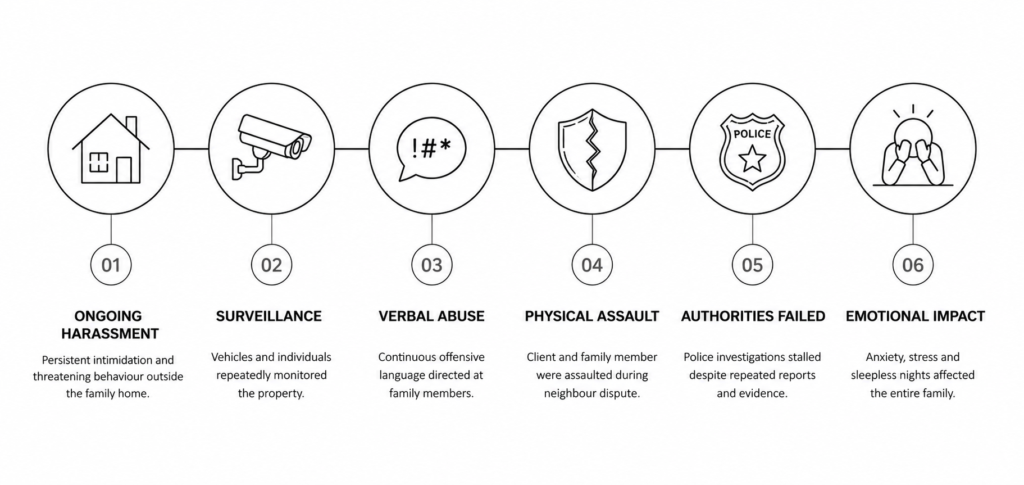
Our client lived with her adult children on a residential street in the West Midlands. Over many months, a neighbour subjected the family to a sustained pattern of harassment.
The behaviour included:
- Associates of the neighbour repeatedly stationed outside her home for long periods
- Vehicles used to block access to the property or watch it
- Verbal abuse of a highly offensive nature aimed at her and her family
- Physical altercations, including an assault on both her and one of her adult sons
- A serious criminal incident at the property, which remained under active police investigation
The neighbour also installed floodlights aimed directly at her house, left on all night. When the local council stepped in and had them removed, they reappeared the moment the council closed the case.
Throughout it all, she kept records. CCTV footage. Time-stamped video. Written logs of every incident.
The toll was real. Disrupted sleep. Persistent headaches. A growing, grinding sense of helplessness.
And yet, formal action kept stalling. Multiple police reports generated several crime reference numbers, including for the assault and the serious criminal matter, but investigations were repeatedly closed for insufficient evidence or simply left open with no progress. A complaint to the Independent Office for Police Conduct (IOPC) produced acknowledgement, but nothing more. Council intervention was temporary at best. No civil orders were in place.
By the time she came to Aldwych Legal, she felt the system had failed her family at every turn.
Understanding the Legal Issues
Was this harassment in the eyes of the law?
The central question was whether the neighbour’s conduct met the legal definition of harassment under the Protection from Harassment Act 1997.
This law makes it unlawful to pursue a course of conduct that amounts to harassment, where the person responsible knew, or ought to have known, that it would have that effect.
Here’s the part many people don’t realise: the legal threshold is just two or more incidents. In this case, the documented pattern ran into dozens.
There’s also no requirement for explicit threats. Persistent intimidation, repeated unwanted presence outside someone’s home, and conduct clearly designed to frighten or destabilise a person can all meet the test, especially where it’s targeted and ongoing.
A second legal framework also applied
The Anti-social Behaviour, Crime and Policing Act 2014 offered further tools, including ASB injunctions for behaviour causing harassment, alarm or distress that affects everyday life.
Crucially, this Act also introduced the Community Trigger (officially the ASB Case Review). Where someone has reported the same issue repeatedly and seen no effective action, this mechanism forces the police, local authority and other agencies to sit down together, review the case as a whole, and agree a plan.
That was directly relevant here. Our client had reported incidents through multiple channels, on numerous occasions, yet nobody had looked at the full pattern.
Why isolated reports weren’t working
Each time an incident was logged as a standalone “neighbour dispute” rather than part of a single, continuing course of conduct, the bigger picture got lost.
That fragmentation wasn’t just frustrating. It was actively working in the neighbour’s favour, letting the pattern of behaviour go unchallenged. Fixing that was just as important as any formal legal step.
How Aldwych Legal Supported the Client
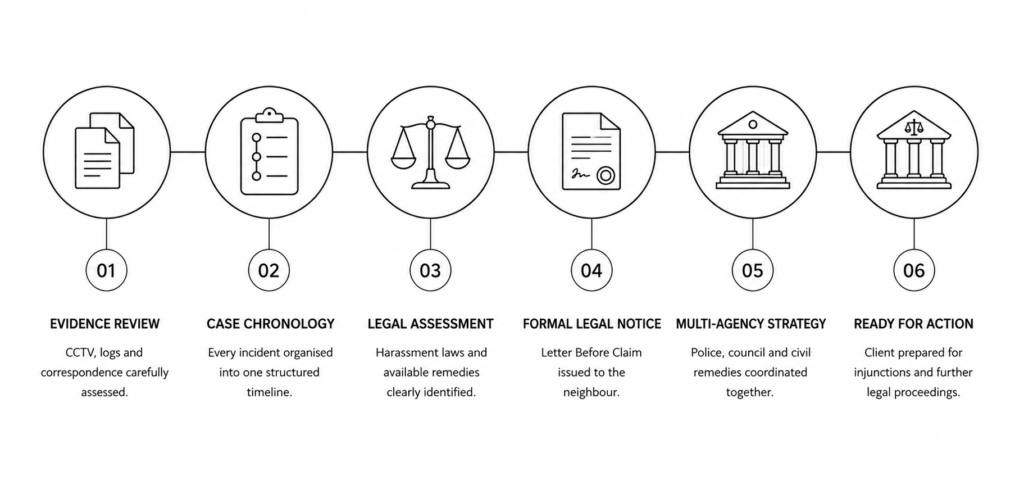
1. Turning scattered evidence into a coherent case
We reviewed everything the client had gathered: CCTV footage, video clips, written logs, vehicle records, police correspondence, council communications and IOPC complaint history.
Every incident was catalogued by date and time. Every video clip was matched to a written account. Vehicles linked to surveillance or intimidation were identified and cross-referenced.
The result was a single, structured evidence pack and chronology, ready to be used in any formal proceeding or authority submission.
2. Clear, written legal advice
We mapped the evidence directly against the legal tests under the 1997 Act and the 2014 Act, and explained, in plain terms, why treating each incident in isolation was the wrong approach.
Our advice set out every available remedy, including:
- Civil injunctions
- ASB injunctions
- The Community Trigger process
- The Victims’ Right to Review, for police investigations that had been closed
We also flagged the strategic risk of doing nothing. Without a firm legal line being drawn, the neighbour was likely to keep testing boundaries, and the family would remain stuck reacting to each new incident rather than getting ahead of it.
3. A formal letter before claim
We drafted and sent a formal letter before claim to the neighbour.
It set out the documented pattern of conduct in precise detail, referenced the relevant legal framework, and made clear that every further incident would be recorded as part of an ongoing evidential chronology.
It also warned that continued behaviour would lead to applications for injunctive relief and claims for damages, and directed all future contact through Aldwych Legal, removing our client from direct engagement with the neighbour or his associates.
4. A coordinated, multi-agency strategy
We advised on running three channels at once:
- The police, including use of the Victims’ Right to Review for closed investigations
- The local authority’s ASB team, including the Community Trigger mechanism
- The civil courts, as the ultimate backstop if the behaviour continued
We also supported the client through the IOPC complaint process, and helped her escalate concerns to relevant council departments and elected representatives.
Our Strategy
The hardest part of this case wasn’t identifying the right legal remedy. It was stopping the situation from getting worse while that remedy was being prepared.
We noticed a pattern: low-level provocation designed to provoke a reaction, which could then be used to paint the family as the problem. Every time the police treated an incident in isolation, that dynamic was reinforced.
So we worked on two fronts at once:
- Draw a clear, documented legal line the neighbour couldn’t ignore
- Challenge the fragmented police response by presenting the full course of conduct as a single, connected picture
The evidence pack did the heavy lifting for both. A well-organised, time-stamped record of dozens of incidents, backed by video, is a very different thing to a stack of separate police reports. It shows pattern. It shows intent. It’s hard to dismiss.
It also met the standard required for civil proceedings, the balance of probabilities, a lower bar than the criminal standard, and one that doesn’t depend on police action at all.
The letter before claim did double duty too. It put the neighbour on formal legal notice, and it created a clear record that our client had taken every reasonable step before considering court action.
Progress Achieved
This matter is still active, but the shift in position is significant.
- A formal letter before claim has been sent, putting the neighbour on legal notice
- A structured evidence pack and detailed chronology are ready for any civil or statutory proceeding
- The client has been advised on every available remedy, and when each would apply
- The matter is prepared for escalation, to the civil courts for injunctive relief, to the local authority for a Community Trigger review, and to the IOPC if police handling needs further scrutiny
Most importantly, our client is no longer managing this alone through piecemeal emails and phone calls.
She now has a coherent strategy, a solid evidential foundation, and a clear path forward if court action becomes necessary.
Key Legal Takeaways
You don’t need to wait for the police. Civil remedies under the 1997 and 2014 Acts operate independently of any criminal investigation.
The threshold is lower than you’d think. Just two incidents can meet the legal definition of harassment. Explicit threats aren’t required.
The Community Trigger exists for exactly this situation. If you’ve reported repeatedly and nothing’s changed, you can request a formal joint review.
Evidence needs structure, not just volume. A messy pile of clips and emails is far less persuasive than a clear, dated chronology.
A formal letter before claim can shift the dynamic without ever going near a courtroom.
Conclusion
Persistent neighbour harassment is difficult to deal with precisely because no single incident looks serious enough on its own. It’s the accumulation that causes the harm, and the accumulation that the law is built to recognise, provided the evidence is presented in a way that makes the pattern impossible to ignore.
Waiting for the police to act, or continuing to report incidents one by one without a coordinated legal strategy, can leave a family stuck in a reactive cycle while the behaviour carries on regardless.
Getting the evidence organised, the legal position clarified, and formal notice served can change that picture substantially, often without ever issuing court proceedings.
How Aldwych Legal Can Help
Aldwych Legal provides non-reserved legal services to individuals and families dealing with harassment, anti-social behaviour and neighbour disputes. This can include:
- Reviewing evidence and correspondence
- Building detailed, structured chronologies
- Advising on the applicable legal framework
- Providing written advice on available remedies
- Drafting pre-action correspondence and formal legal notices
- Preparing Community Trigger and Victims’ Right to Review submissions
- Advising on negotiation and escalation strategy
Where a matter requires reserved legal work, such as issuing court proceedings or applying for an injunction, we prepare the case thoroughly and work alongside an appropriately authorised solicitor or direct-access barrister to ensure continuity and the best possible outcome.
This kind of case often overlaps with related areas of Civil Law, Dispute Resolution, and, where local authority involvement is central to the case, Local Government Law. Where police conduct itself needs formal scrutiny, our work can also touch on Public Law and Human Rights & Civil Liberties.
If you or your family are living with persistent harassment or anti-social behaviour, and feel your reports aren’t being taken seriously, we can help you take proper control of your position.
Contact Aldwych Legal at info@aldwychlegal.com or visit www.aldwychlegal.com.
Frequently Asked Questions
Do I need to wait for the police to act before taking civil legal action against a harassing neighbour?
No. Civil remedies under the Protection from Harassment Act 1997 and the Anti-social Behaviour, Crime and Policing Act 2014 are available independently of any criminal investigation. Civil courts apply the balance of probabilities standard, a lower bar than the criminal standard, so well-organised video evidence, incident logs and written records can carry real weight. You don’t need a criminal conviction, or even a charge, to seek civil protection.
What is the Community Trigger, and when can I use it?
The Community Trigger (officially the ASB Case Review) is a statutory mechanism under the Anti-social Behaviour, Crime and Policing Act 2014. If you’ve reported anti-social behaviour three or more times within a defined period and feel nothing effective has been done, you can request a formal multi-agency review. This compels the police, local authority and other agencies to review your case together and agree an action plan. It’s designed for exactly this situation, where someone has done everything asked of them and the behaviour has continued regardless. The threshold and process vary slightly between local authorities, so professional advice on how to present your case can make a real difference.
How important is evidence in a harassment or anti-social behaviour case?
It’s central. Both the 1997 Act and the 2014 Act require proof of a course of conduct, a pattern, not a single incident. Video footage, time-stamped logs, written records and correspondence with authorities all help build that picture. How the evidence is organised matters just as much as the evidence itself; a clear, structured chronology is far more persuasive than a scattered folder of individual reports. Getting advice early on how to gather, preserve and present your evidence can significantly strengthen your position.