

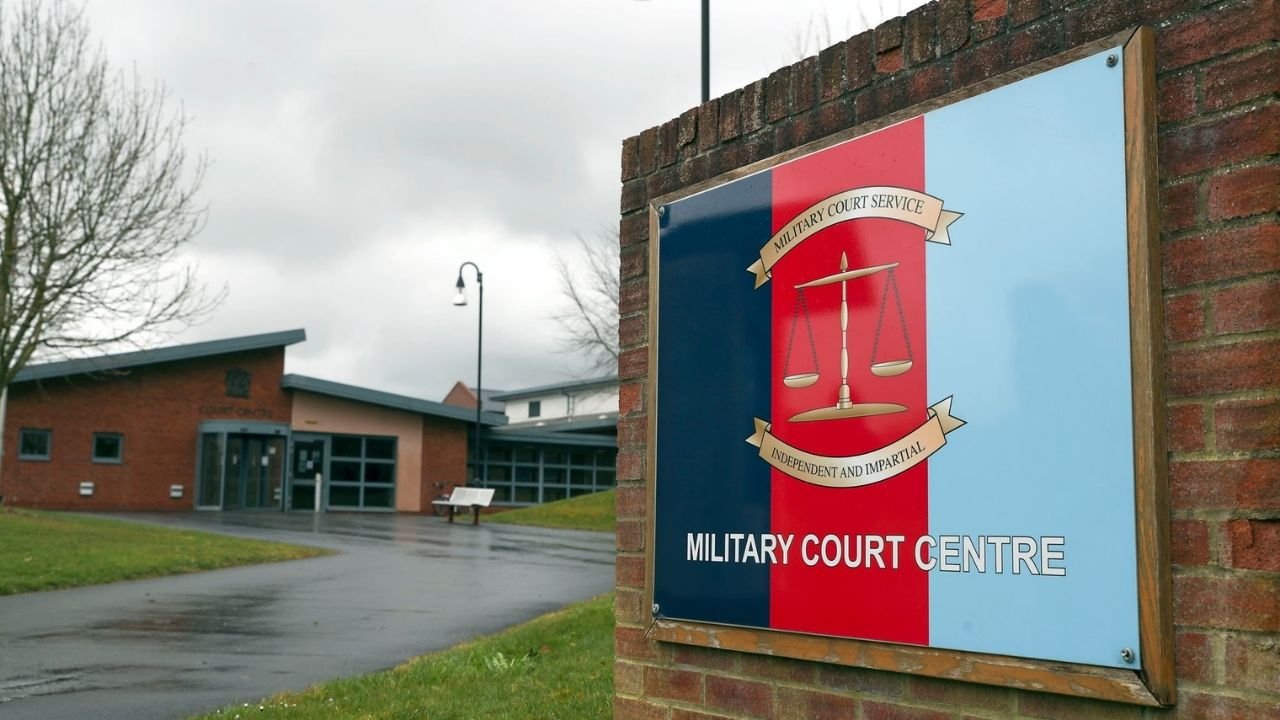
Inspectors have praised the largely unseen work of the Military Court Service (MCS), highlighting its role in supporting the effective and fair administration of justice for members of the armed forces.
The MCS provides criminal court services for the Royal Navy, Army and Royal Air Force through the Court Martial, Summary Appeal Court and Service Civilian Court.
An inspection by the Crown Prosecution Service inspectorate found that the service performs strongly in several areas, including case preparation, legal aid checks, courtroom arrangements and communication with legal professionals.
During 2025–26, 96% of plea and trial preparation hearings were listed within 42 days of the relevant material being received. Inspectors also found that 95% of those hearings were effective.
Legal aid and representation checks are routinely carried out 21 days before hearings. This allows court staff to identify potential issues in advance that could otherwise affect the progress of a case.
Court staff also monitor compliance with court directions, issue reminders, follow up outstanding actions and refer matters back to judges where additional case management is required. The service generally lists only one trial at a time.
Inspectors particularly praised the MCS’s courtroom technology and its ability to establish portable court facilities.
During the inspection, staff set up a temporary court at a disused military facility in Belfast ahead of a week-long trial. Inspectors observed the secure transportation of equipment, deployment of laptops, installation of audiovisual and recording systems and establishment of the connectivity required to operate the court.
The report described the portable court arrangements as an example that the civilian justice system could aspire to.
Communication between the MCS and defence lawyers, probation services and judges was also found to be effective. Feedback from one defence practitioner was particularly positive, with the service’s working culture compared favourably with experiences in civilian criminal courts.
However, inspectors identified weaknesses in the service’s administrative systems.
Listing, case progression and other court administration remain reliant on fragmented systems, spreadsheets and manual processes. The report warned that this creates a degree of dependence on experienced staff and informal knowledge.
Inspectors said these arrangements could become vulnerable if key personnel leave, demand increases or workloads change.
Anthony Rogers, Chief Inspector for the Crown Prosecution Service, said the work of the Military Court Service often goes unseen but remains fundamental to delivering fair and effective justice for service personnel.
The inspection’s recommendations are intended to strengthen the areas that are already working effectively rather than address fundamental failures.
The report indicates that maintaining the service’s existing standards while improving its administrative infrastructure will be important to ensuring the Military Court Service remains resilient and effective in the future.